The people behind Kwish
Engineers, AI specialists and delivery leads working across Kampala, Nairobi, Stockholm and Toronto.

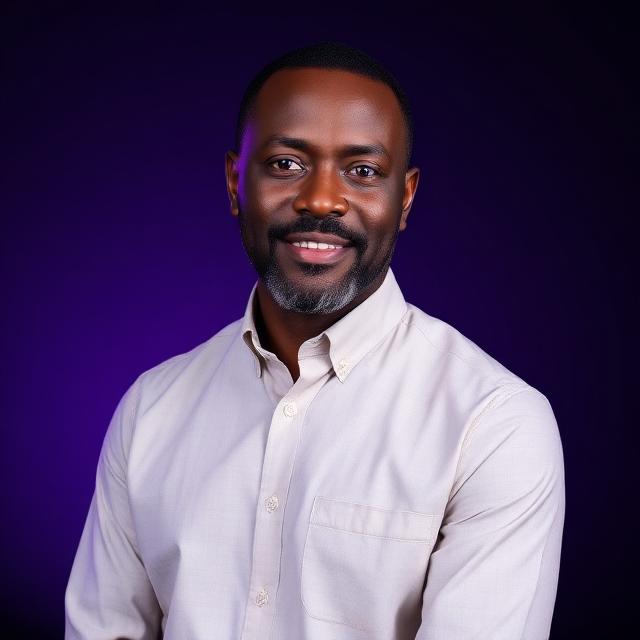
T.J. James
Machine Learning Engineer and AI Product Builder with deep expertise in designing, training, and deploying neural networks at scale. I bridge the gap between research and production — translating complex AI capabilities into products people actually use.
My technical stack includes deep learning frameworks (TensorFlow, PyTorch), LLM fine-tuning and prompt engineering, vector databases, and cloud-native ML infrastructure. I've built autonomous systems, recommendation engines, and generative AI applications that serve real users and generate real results.
Entrepreneurial track record: I've founded and shipped multiple AI-native products — each solving distinct problems, each with live users, each generating real-world feedback loops that make the models smarter over time. I know what it takes to go from Jupyter notebook to paying customer, and I've done it more than once.
Not all those who wonder are lost. I am training neural networks to crown a continent.
Twelve functions. One delivery standard.
Every engagement is staffed from these functions, no juniors fronting client work.

Owns model selection, evaluation and guardrails for every AI module we ship.

Owns the design system and interfaces built for low bandwidth and multilingual users.

Owns sector research, benchmarking and the frameworks behind our published analysis.

Owns pipelines, warehouses and data quality gates that every model depends on.

Owns production architecture and uptime for every deployed platform.

Owns each rollout from scope through training, adoption and outcome reporting.

Owns milestones, dependencies and client reporting across concurrent builds.
Owns government, university, telecom and cloud partner relationships.

Owns CI/CD, cloud infrastructure, observability and platform reliability across all environments.

Owns internal operations, vendor management, compliance workflows and cross-office coordination.
How we work as a team.
Client work is done by the people who can actually build it. No pyramid of juniors billing hours behind a partner. If someone is in the room, they have shipped the thing being discussed, and they stay attached to the engagement until it is live.
We work where the system will run. That means time in ministries, on campuses and in newsrooms, watching the real workflow before writing code, and returning after launch to train the internal teams who own it next.
Every build is judged by whether it could work in five more markets. We favour patterns, tooling and data models that travel, because the point is not one good platform, it is African institutions leading AI broadly.
We hire slowly and deliberately.
Roles open when a client commitment demands them. If your work speaks for itself, tell us what you have shipped.