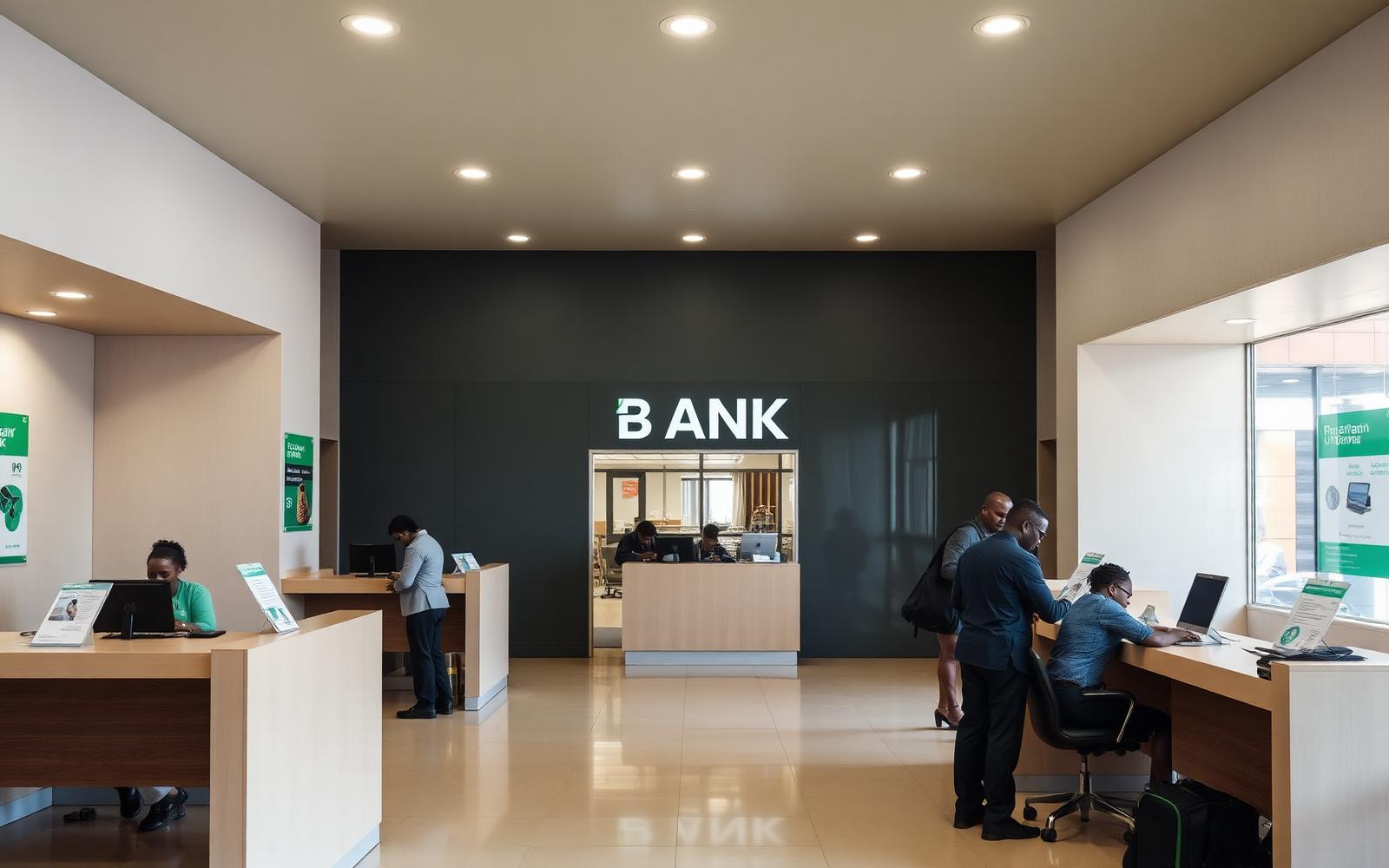
Core Banking Won't Save You: Why African Banks Need AI-Native Risk Engines
A core system records transactions; it does not decide who deserves credit. That decision still runs on models imported from Basel-era Europe.
Most African banks are still buying core banking upgrades and calling it transformation. A core system records transactions; it does not decide who deserves credit. That decision still runs on risk models imported from Basel-era Europe, calibrated on salaried borrowers with bureau histories, payslips, and titled collateral.
Applied to a Kampala trader with eleven years of mobile money turnover and no formal statements, those models return the same answer every time: decline. That is not risk management. It is a data mismatch dressed up as prudence.
The signal exists, it is just not in the format the model expects
Mobile money velocity, agent float behaviour, airtime top-up regularity, supplier payment rhythm, and the stability of counterparties are richer behavioural predictors than most payslips. A trader who has settled with the same three wholesalers every week for four years is demonstrating something a salary slip cannot: durability under actual trading conditions.
The work is building a risk engine that ingests these natively, as time series and graph features rather than as a handful of ratios copied into a legacy scorecard. Retrofitting two mobile money fields into an existing application form does not do this. It produces a model that still fundamentally scores formality.
A trader who has settled with the same three wholesalers every week for four years is demonstrating something a salary slip cannot.
Explainability is a regulatory precondition, not a virtue
Central banks in the region will rightly ask how a model reached its decision, and so will a declined customer. That rules out opaque ensembles trained on features nobody can articulate. Feature engineering has to produce human-legible drivers: turnover stability, counterparty concentration, seasonal dip depth, float recovery time.
This constraint is a gift disguised as a burden. Legible features are also the ones credit officers can challenge, which is how model error gets caught before it becomes portfolio loss.
Shadow-run before you approve anything
The safe deployment path is unexciting. Score every application the existing process scores, in parallel, without influencing the outcome. After six months, compare: which loans the new engine would have approved and how they actually performed, and which it would have declined that the bank booked and lost.
Only then does the model touch an approval, and even then on one portfolio with a hard exposure cap. Banks that skip the shadow phase either overlend into an unproven segment or lose confidence at the first default and abandon a model that was working.
The competitive stake
Thin-file lending is not charity; it is the largest underserved credit market on the continent, and the institutions that learn to underwrite it will hold customer relationships for decades. Fintechs are already doing this with worse balance sheets and better data pipelines. The banks' advantage is cost of funds and distribution. Their disadvantage is a risk function that cannot see the borrower.
What this means in practice
- Pick one portfolio and build a single scorecard on native mobile money behaviour rather than adding fields to the legacy model.
- Shadow-run against existing decisions for at least six months before the engine influences a single approval.
- Constrain feature engineering to drivers a credit officer and a regulator can both read in one sentence.
- Set an explicit exposure cap for the first cohort and publish performance internally at 90, 180, and 360 days.
Frequently asked questions
- What is this analysis about?
- A core system records transactions; it does not decide who deserves credit. That decision still runs on models imported from Basel-era Europe.
- What is the core argument?
- Most African banks are still buying core banking upgrades and calling it transformation. A core system records transactions; it does not decide who deserves credit. That decision still runs on risk models imported from Basel-era Europe, calibrated on salaried borrowers with bureau histories, payslips, and titled collateral.
- The signal exists, it is just not in the format the model expects?
- Mobile money velocity, agent float behaviour, airtime top-up regularity, supplier payment rhythm, and the stability of counterparties are richer behavioural predictors than most payslips. A trader who has settled with the same three wholesalers every week for four years is demonstrating something a salary slip cannot: durability under actual trading conditions.
- What should our organisation do about it?
- Pick one portfolio and build a single scorecard on native mobile money behaviour rather than adding fields to the legacy model. Shadow-run against existing decisions for at least six months before the engine influences a single approval. Constrain feature engineering to drivers a credit officer and a regulator can both read in one sentence. Set an explicit exposure cap for the first cohort and publish performance internally at 90, 180, and 360 days.
- Who published this and can we discuss it with Kwish?
- Kwish Research Team at Kwish Technologies published this on January 2026. Kwish works on finance programmes from offices in Uganda, Kenya, Sweden and Canada, and you can reach the team at info@kwishtechnologies.com.
Keep exploring
Turn this analysis into delivery
The services, sectors and case studies connected to this article.
Services that deliver this
Sectors where this applies
Related insights

Fraud at Mobile Money Scale: AI Detection for a Billion Transactions
Mobile money moves more value across East Africa than the card networks, and it is defended largely by rules written years ago.

Why African Governments Need AI-Native Systems, Not Retrofits
The temptation when modernising government technology is to retrofit. That instinct is exactly what Africa cannot afford.

The Hidden AI Infrastructure Gap in East African Universities
Faculty want AI in the classroom. IT departments don't have the data plumbing to deliver it. Here's the gap nobody is funding.
Want this applied to your organisation?
Send us the decision you are trying to make. We reply with a scoped quotation.
Most quotations answered within one business day.