AI in Agricultural Export Markets: Meeting EU Traceability Rules Before They Lock You Out
The EU Deforestation Regulation asks a question most African export chains cannot currently answer. Traders who cannot answer it lose shelf access quietly.
The EU Deforestation Regulation asks a question most African export chains cannot currently answer: exactly which plot of land did this coffee, cocoa, or palm oil come from, and was it forested in 2020?
Traders who cannot produce geolocated, farm-level evidence will lose shelf access, not through a policy debate, but quietly, at the point of purchase.
Aggregation is what makes this hard
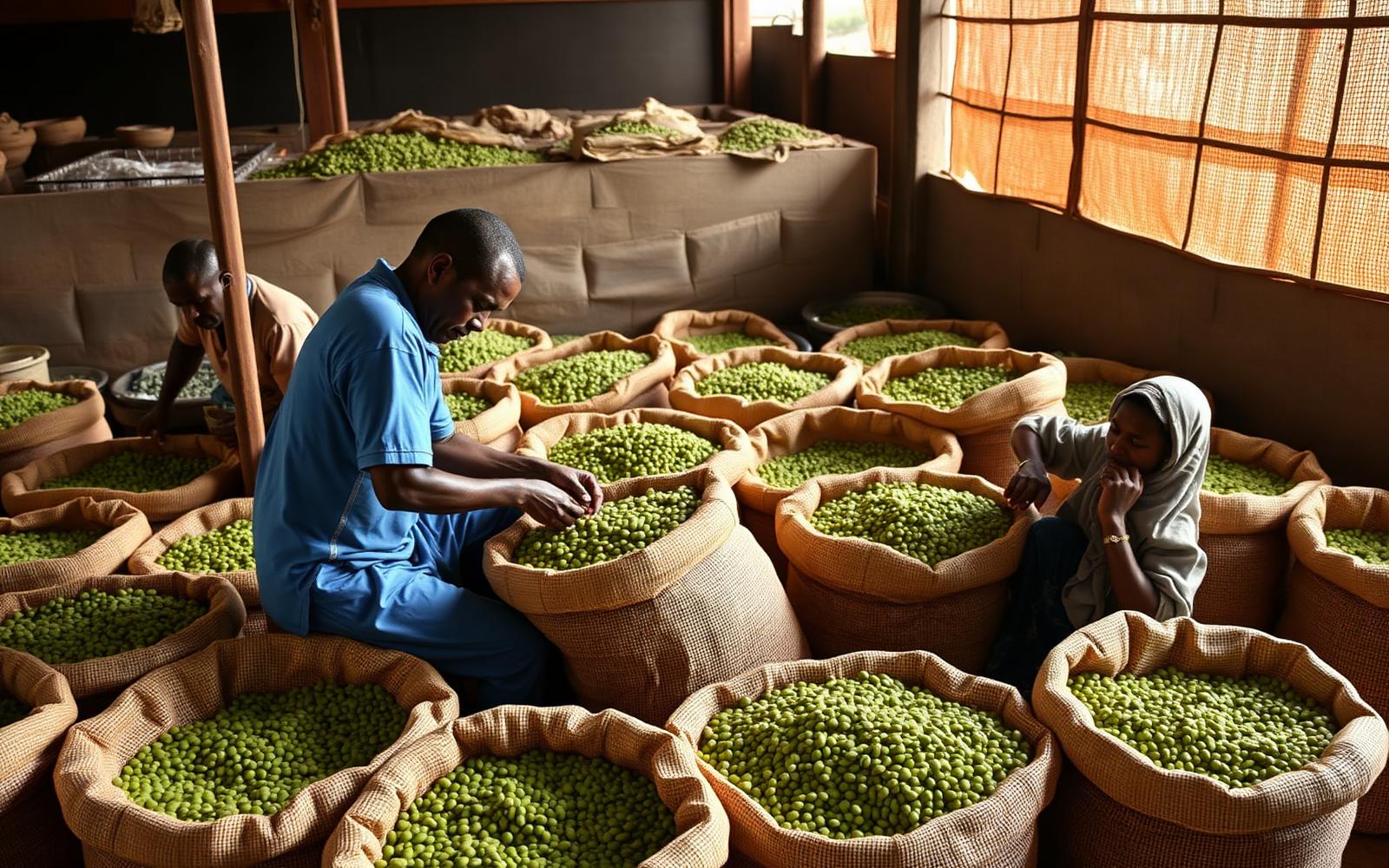
A single container consolidates hundreds of smallholder deliveries through layers of middlemen who keep records in notebooks, if at all. By the time the lot reaches the exporter, the link between beans and plots has been destroyed several times over.
Fixing it means capturing plot polygons at first purchase, tying each delivery to a farmer identity, and reconciling that against satellite forest-cover history. The work is boring, field-heavy, and entirely achievable, which is precisely why it keeps being deferred in favour of software procurement.
Exporters who digitise first do not merely stay compliant. They gain a dataset their competitors cannot buy.
Where AI actually contributes
Three places. First, plot boundary extraction from satellite imagery, so field officers verify and correct polygons instead of walking every perimeter. Second, forest-change detection against the 2020 baseline, which is a well-understood remote sensing task at the accuracy the regulation implies. Third, anomaly detection on volumes: flagging when a collection point declares more output than its registered plot area could plausibly produce, which is the main leakage path for non-compliant supply entering a compliant chain.
Everything else in the compliance stack is disciplined data capture, not machine learning, and pretending otherwise is how exporters end up with an expensive platform and an unverifiable claim.
Compliance is the wedge, not the cost
Exporters who digitise first do not merely stay compliant. They gain a dataset their competitors cannot buy: farm-level yield, quality, and reliability histories across their supply base. That supports premium positioning, targeted input finance, and stronger negotiation with buyers who increasingly want evidence rather than assurance.
It also changes the relationship with farmers. A digitised, identified supplier is a farmer who can be paid faster, financed, and rewarded for quality, which is how a chain holds onto its best producers when a competing buyer arrives with a marginally higher price.
Start narrow
One commodity, one buyer's documented requirements, one collection region. Prove plot-to-container traceability end to end for a single season, then extend. Attempting whole-portfolio compliance in one programme is the reliable way to arrive at the deadline with partial data across everything and defensible data across nothing.
What this means in practice
- Capture plot polygons and farmer identity at first purchase this season, even on paper-to-photo workflows, before buying a platform.
- Run satellite forest-change detection against the 2020 baseline across your existing supply base to find exposure now.
- Add volume-plausibility checks at collection points to stop non-compliant supply entering a compliant chain.
- Prove end-to-end traceability for one commodity, one region, and one buyer's requirements before extending to the full portfolio.
Frequently asked questions
- What is this analysis about?
- The EU Deforestation Regulation asks a question most African export chains cannot currently answer. Traders who cannot answer it lose shelf access quietly.
- What is the core argument?
- The EU Deforestation Regulation asks a question most African export chains cannot currently answer: exactly which plot of land did this coffee, cocoa, or palm oil come from, and was it forested in 2020?
- Aggregation is what makes this hard?
- A single container consolidates hundreds of smallholder deliveries through layers of middlemen who keep records in notebooks, if at all. By the time the lot reaches the exporter, the link between beans and plots has been destroyed several times over.
- What should our organisation do about it?
- Capture plot polygons and farmer identity at first purchase this season, even on paper-to-photo workflows, before buying a platform. Run satellite forest-change detection against the 2020 baseline across your existing supply base to find exposure now. Add volume-plausibility checks at collection points to stop non-compliant supply entering a compliant chain. Prove end-to-end traceability for one commodity, one region, and one buyer's requirements before extending to the full portfolio.
- Who published this and can we discuss it with Kwish?
- Kwish Research Team at Kwish Technologies published this on March 2026. Kwish works on agriculture programmes from offices in Uganda, Kenya, Sweden and Canada, and you can reach the team at info@kwishtechnologies.com.
Keep exploring
Turn this analysis into delivery
The services, sectors and case studies connected to this article.
Services that deliver this
Sectors where this applies
Related insights
From Satellite to Smallholder: AI Crop Intelligence That Reaches the Last Mile
Satellite yield prediction is close to solved. Almost none of that intelligence reaches the farmer holding two acres in Mbale.
Why African Governments Need AI-Native Systems, Not Retrofits
The temptation when modernising government technology is to retrofit. That instinct is exactly what Africa cannot afford.

The Hidden AI Infrastructure Gap in East African Universities
Faculty want AI in the classroom. IT departments don't have the data plumbing to deliver it. Here's the gap nobody is funding.
Want this applied to your organisation?
Send us the decision you are trying to make. We reply with a scoped quotation.
Most quotations answered within one business day.